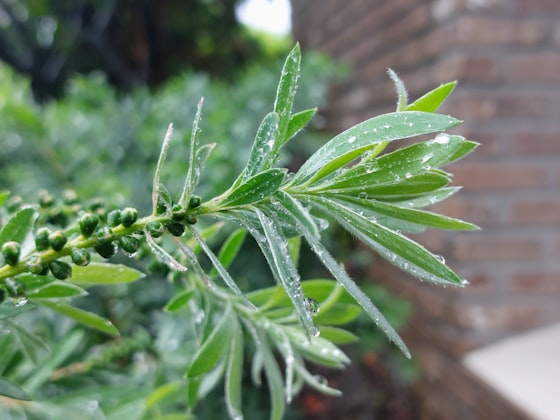
Tea Tree
Melaleuca alternifolia
Extracted by steam distillation from the leaves and from the twigs of Melaleuca alternifolia (Maiden & Betche) Cheel (tea tree, tea tree, melaleuca), shrub or small tree of the Myrtaceae endemic of the New South Wales in Australia, where grows in the wet and marshy coastal areas. The name 'tea tree' was coined from the sailors of James Cook who used the leaves as substitute of tea. L'oil of tea tree is one of the essential oils most studied in the world: over 300 scientific publications document the broad-spectrum antimicrobial properties. The phytochemical profile is defined by the standard ISO 4730:2017, which sets the quality parameters: terpinen-4-olo (>30%), γ-terpinene (10-28%), α-terpinene (5-13%) and 1,8-cineole (<15%). The terpinen-4-olo is the key component with antibacterial activity, antiviral and antifungal documented against MRSA, Candida albicans, HSV and influenza viruses. In aromatherapy is the natural antiseptic of first choice for acne, fungal infections, herpes, wounds and skin infections. Top note medicinal, fresh and caratteristicaly arbustive.
Australia (Queensland and New South Wales), where grows spontaneously in the coastal wetlands.
Leaves and terminal twigs
Steam distillation
3 drops of Tea Tree + 2 drops of Lavender in 30 ml of gel of Aloe vera. Apply to the T-zone and blackheads. Excellent excellent evening anti-acne serum.
2 drops of Tea Tree undiluted directly on the nail with a cotton swab, twice a day for at least 3 months. Combine 2 drops of Oregano to enhance the effect.
20 drops of Tea Tree + 10 drops of Eucalyptus + 10 drops of Lemon in 100 ml of distilled water with 10 ml of alcohol. Spray on surfaces and in the air.
Blends well with: