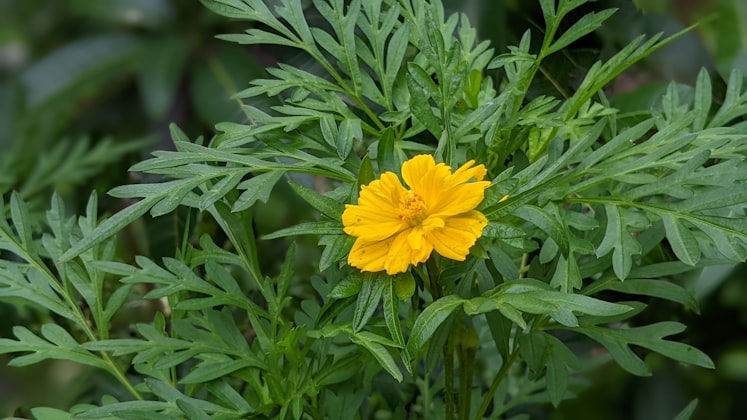
Tagete
Tagetes minuta
Extracted by steam distillation from the parts aeree flowering of Tagetes minuta L. (tagete, wild marigold, khaki weed) or of Tagetes glandulifera Schrank (tagete ghiandolous), plants annual of the Asteracee originarie of the Sudamerica (Argentina, Cile, Bolivia), where crescono spontaneously as erbe infestant on the soils perturbati. In Sudafrica and in the South America the tagete and one of the principal produttori commercial of essential oil. The phytochemical profile is dominated by diidrotagetone (30-55%), trans-ocimene and aromatictriene — ketones and terpeni with properties parassiticide and antifungal eccellent. The tagete and the oil of choice for the fungal infections of the feet resistent (tinea pedis, onychomycosis from dermatofiti), for the verruche skin and for the elimination of the parassiti intestinal. Attenzione: and photosensitizing and dermocaustic to concentrations high; topical use max 0.1%. Not confondere with the tagete of the calendule ornamental. In aromatherapy and used as antifungal powerful, antiparassitario, antiviral (verruche) and as repellent for insects and mosquitoes. Top note pungent, fruity-herbaceous and strongly characteristic.
America central
Plant in flower
Steam distillation
2 drops Tagete + 3 drops Tea tree + 2 drops Lavender in 20 ml of coconut oil. Apply twice a day on the areas with piede of atleta — the tagete has activity antifungal elevata.
2 drops Tagete + 3 drops Lavender + 2 drops Eucalyptus citriodora in 25 ml of jojoba oil. For infestations parassitarie skin: acari, pidocchi and other ectoparassiti. Only adults.
2 drops Tagete + 3 drops Helichrysum + 2 drops Myrrh in 20 ml of oil of St. John's wort. For wounds cronic, callosita plantari and areas cheratinizzate in eccesso — apply with caution.
3 drops Tagete + 3 drops Citronella + 2 drops Geranium on tamponi or nebulizzatore. THE tagetoni are insettifughi noti: piantato in giardino repels fisicaly afidi and nematodi.
2 drops Tagete + 3 drops Lavender + 2 drops Lemon in 20 ml of jojoba oil. Apply to the callosita plantari the evening, covering with a calzino, for the cheratolitic sweet.
Blends well with: